 Home
Home About us
 Educational Events
 Experience
 Magazine
 Resources Limb Reconstruction
 Social Responsibility
 Contact us
 Privacy policy
 Cookie policy
ABSTRACT
The Role of Operating‑Room Personnel in Limb Reconstruction
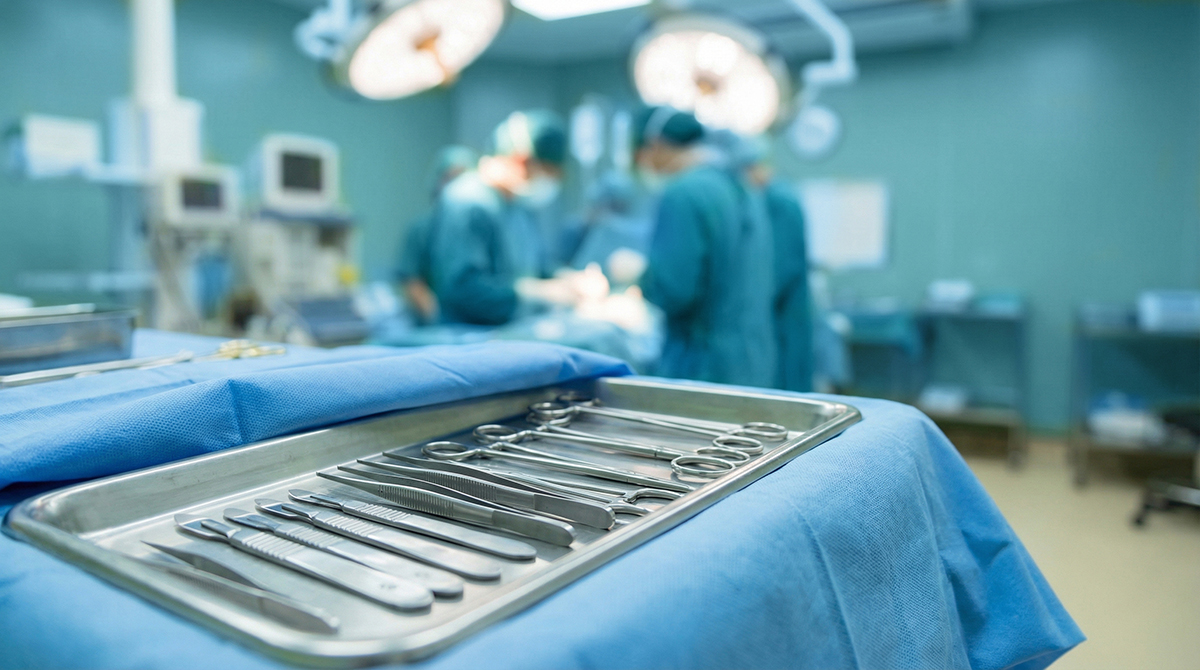
Orthopedic limb reconstruction relies on a highly coordinated Operating‑Room (OR) team working alongside specialized surgeons.
In these complex procedures, OR personnel —including scrub nurses, circulating nurses, surgical technologists, and OR technicians— are essential to safe, efficient limb‑reconstruction procedures.[1][2][3][4][5]
What OR Teams Do
- Maintain a Safe, Sterile Environment
OR nurses and scrub staff manage the sterile field, instruments, implants, and bone‑grafting materials, supporting aseptic technique throughout long and complex reconstructions. Circulating nurses coordinate with sterilization and infection‑control teams to ensure compliance at every step.[3][4][5]
- Keep Surgical Workflow on Track
Surgical technologists anticipate each step of the procedure, preparing trays and implants to reduce delays and unnecessary imaging. Circulating nurses align timing, equipment, and communication across the surgical and anesthesia teams to maintain smooth, efficient intraoperative flow.[2][4][1][3]
- Advocate for Patients
During extended reconstructive procedures, OR nurses monitor positioning, pressure points, and limb protection to help prevent nerve injuries or other avoidable complications. Accurate documentation supports postoperative planning and long‑term care.[5][2]
Why Specialized Training Matters
Limb reconstruction involves lengthy surgeries, multiple implant systems, external fixation, and continuous imaging. Without targeted training, OR personnel may miss key cues or mishandle devices—issues that can increase complication risk or prolong operative time.[1][2][5]
Industry‑supported education helps standardize knowledge across sites and strengthens team readiness, giving OR teams the confidence and consistency needed for complex reconstructive workflows.[2]
Core Curriculum for Limb‑Reconstruction OR Teams
A structured curriculum can include:
- Fundamentals of limb reconstruction: lengthening, deformity correction, and bone‑defect management[1][2]
- Overview of implant systems: nails, plates, external fixators, transport devices[1][2]
- OR workflows specific to complex orthopedic procedures
- Hands‑on training for scrub nurses and technologists on tray setup, implant assembly, and troubleshooting[4][3]
- Training for circulating nurses on documentation, communication, and coordination across multidisciplinary teams[2][5]
How Digital Education for Ongoing Learning
E‑learning modules, updates on new techniques, and best‑practice libraries offer flexible ways for OR teams to stay current on devices, workflows, and evolving standards—complementing in‑person instruction and supporting continuous improvement.[2][5]
How Enhanced Training Improves Patient Care
Strong OR preparation may lead to: [1][2][5]
- Safer, more efficient surgical workflows
- Fewer complications related to infection, device handling, or patient positioning
- Shorter operative times
- Better documentation to support early rehabilitation
- More consistent collaboration among OR teams, surgeons, and rehab specialists
Targeted training ultimately supports more predictable, patient‑centered outcomes in limb reconstruction.[2][5]
Explore On‑Demand Learning
Orthofix offers a growing collection of on‑demand educational resources designed to support OR teams involved in limb reconstruction.
Explore the available modules to stay current on procedures, devices, and best practices.
Sources
- https://www.boa.ac.uk/resource/best-practice-in-limb-reconstruction-surgery-in-the-united-kingdom.html
- https://int.livhospital.com/doctor-operating-room-7-key-roles-in-the-surgical-team-explained/
- https://www.unasourcesurgery.com/surgery-team-members-how-they-contribute-in-the-or/
- https://pmc.ncbi.nlm.nih.gov/articles/PMC10350747/
- https://www.sciencedirect.com/science/article/pii/S1878124125000231
