 Home
Home About us
 Educational Events
 Experience
 Magazine
 Resources Limb Reconstruction
 Social Responsibility
 Contact us
 Privacy policy
 Cookie policy
ABSTRACT
Preventing and Managing Pin Track Infection in External Fixation
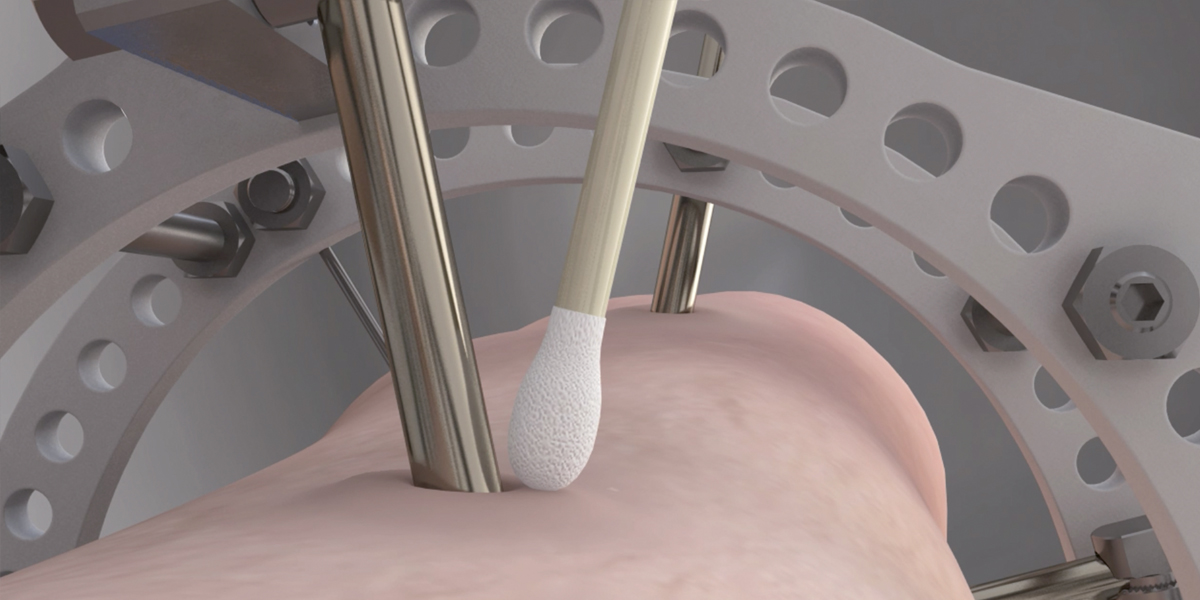
Pin track infection is one of the most frequent complications associated with external fixation. While usually minor, it can compromise patient comfort, rehabilitation, and construct stability if not managed effectively.
This summary highlights key practical principles adapted from the literature to support OR teams and clinicians in preventing and managing pin track infection throughout the fixation lifecycle.
Why Pin Track Infections Occur
The primary contributor to pin track infection is mechanical instability at the bone–pin interface. Micromotion leads to pin loosening, local tissue irritation, and bacterial ingress.
Key contributing factors include:
- Poor construct stability
- Excessive soft‑tissue movement around the pin
- Thermal or mechanical bone damage during insertion
Stability plays a central role in prevention. Hydroxyapatite‑coated pins, which improve pin–bone fixation, have been shown to significantly reduce infection risk by limiting loosening over time.
Pin Insertion: Getting It Right in the OR
Effective prevention starts in the operating room. Pin and wire insertion should be atraumatic, low‑energy, and precise, with careful attention to both bone and soft tissues.
Best practices include:
- Create small, pin‑sized skin incisions, positioned to avoid skin tension
- Aim for rapid skin healing to seal the bone–pin interface
- Use predrilling with pulsed drilling and cold saline irrigation to reduce thermal necrosis and clear debris
- Always predrill when placing half‑pins, even with self‑drilling designs
- Protect soft tissues using a drill guide sleeve
- Use non‑touch techniques whenever possible
- Avoid high‑tension areas, such as the anterior tibial crest and contracted muscle compartments
Attention to these details reduces early tissue trauma and lowers the risk of subsequent infection.
Perioperative Management and Daily Pin Care
Immediately after surgery, pin sites should be protected to stabilize the skin–pin interface and minimize swelling.
Recommended protocols include:
- Apply sterile dressings with gentle pressure to prevent skin tenting and hematoma
- Cover the limb and external fixator with a sterile dressing for the first postoperative week
- Maintain limb elevation whenever the patient is not mobilizing to reduce edema
At some institutions, pin sites are left undisturbed for the first seven days using a chlorhexidine‑based dressing, followed by twice‑daily cleaning with a chlorhexidine solution. Once the sites have healed, routine dressings may be discontinued, but pin site hygiene should continue for the duration of external fixation.
Daily Activities and Hygiene
Once pin sites have healed:
- Showering is permitted, with thorough drying of the limb and fixator
- Swimming is allowed in chlorinated pools
- Swimming in lakes, dams, or the ocean is discouraged due to contamination risk
Clear guidance helps patients maintain hygiene without increasing infection risk.
Recognizing and Managing Pin Track Infection
Most pin track infections are minor and manageable when identified early.
Initial management steps include:
- Reinforce limb elevation to reduce dependent swelling
- Restart or intensify pin site care immediately
- Clean the pin–skin interface twice daily with chlorhexidine
- Use absorbent dressings if excessive exudate is present
Clinical grading systems, such as the Checketts–Otterburn classification, help guide treatment decisions. The majority of cases fall into lower‑grade categories and resolve with local care and close monitoring.
Key Takeaways for OR Teams
- Pin track infection is common but rarely serious
- Stability at the bone–pin interface is the most important preventive factor
- Atraumatic insertion techniques and standardized pin care protocols make a measurable difference
- Early recognition and prompt intervention prevent escalation
Consistent OR practices and coordinated postoperative care support safer external fixation and better patient experiences.
Source
Ferreira N, Marais LC. Prevention and management of external fixator pin track sepsis. Strategies in Trauma and Limb Reconstruction. 2012;7(2):67–72. doi:10.1007/s11751-012-0139-2
Accessed via PubMed: https://pubmed.ncbi.nlm.nih.gov/22729940/
